
EP359 FIMEP 2026 Guadalajara: My Impressions
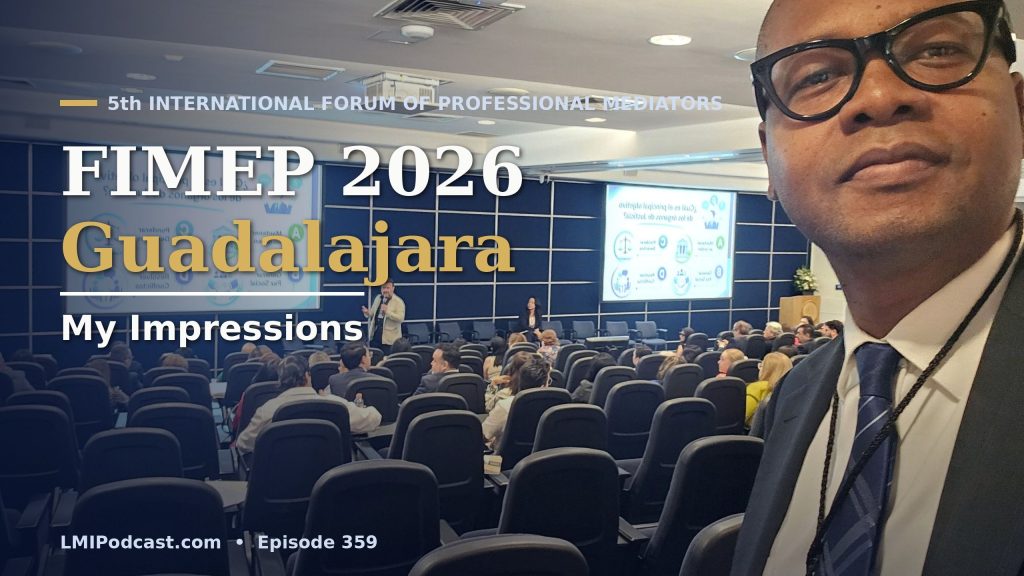
Hi everyone. This is the follow-up to my recent video episode with Alberto Elisavetski where we introduced the upcoming event: the 5th International Forum of Professional Mediators (FIMEP 2026). Well, I’ve just attended the in-person forum in Guadalajara. As I did with the 3rd Congress International de toutes les Mediation in Angers, France and with the 25th International Forum on Online Dispute Resolution in London, I took the LMPodcast on the road to Mexico, and I would like to share my experience.
The forum ran a hybrid format this year — two virtual days on May 26–27, followed by two in-person days on May 28–29. I’m writing this on the final day, my fourth with the event, before leaving Guadalajara tomorrow. This was my first FIMEP, and as in France and England, I came to sharpen my mediator skills, understand conflict resolution from perspectives outside my own, and connect with colleagues around the world who share a passion for resolving disputes outside the courtroom.
A little history of FIMEP for those who are unfamiliar
If you’ve never heard of FIMEP, you’re not alone, it’s far better known in the Spanish-speaking mediation world than in the U.S. The Foro Internacional de Mediadores Profesionales was constituted in July 2014 as a nonprofit international association serving professional mediators across every discipline and territory. Its founding idea is simple and one I love: to develop and exchange knowledge, skills, and information across the entire field of mediation, in any country and in any language, promoting what they call the “cultura del acuerdo,” the culture of agreement. The Forum has even been recognized by the United Nations as an academic-impact entity, and was originally hosted at the Universidad Loyola Andalucía in Spain.
The forum gathers every two years and moves from country to country. Earlier editions traced a path through Spain — Seville and Córdoba — and most recently Buenos Aires, Argentina, before landing here in Guadalajara for this fifth reunion. This year’s edition is organized by FIMEP alongside the Instituto de Justicia Alternativa de Jalisco (or IJA) and ODR Latinoamérica, the technology-focused dispute-resolution network led by Alberto.
This year’s theme centered on the sistema multipuertas, the “multi-door” courthouse concept, and the development of the various appropriate dispute-resolution methods (what the region calls MASC).
Arriving and Guadalajara
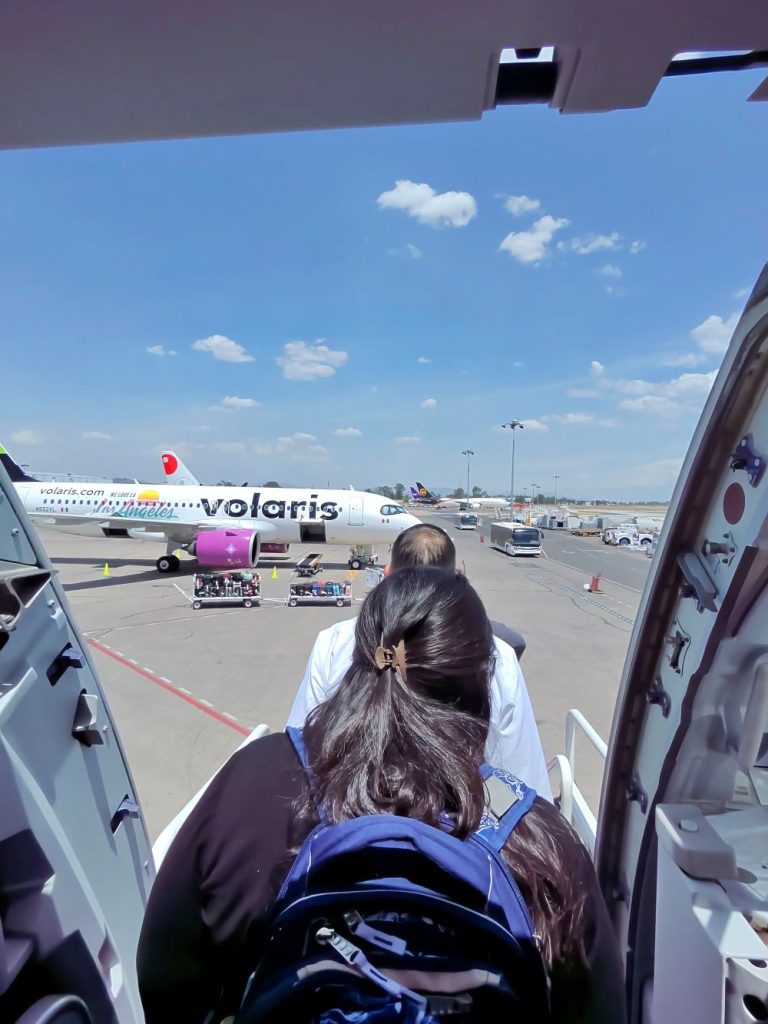
Arrival was smooth and uneventful. My only issues were difficulties getting to the hotel from the airport. I hope the Guadalajara airport authorities address the problems with calling an Uber directly from the airport without going through workarounds.
The forum was held at the Universidad of Panamerica (Guadalajara campus), and I stayed at a nearby hotel about two miles away. I discovered quickly, mainly due to the summer heat, that I would not be walking, so Ubers became my transportation routine.
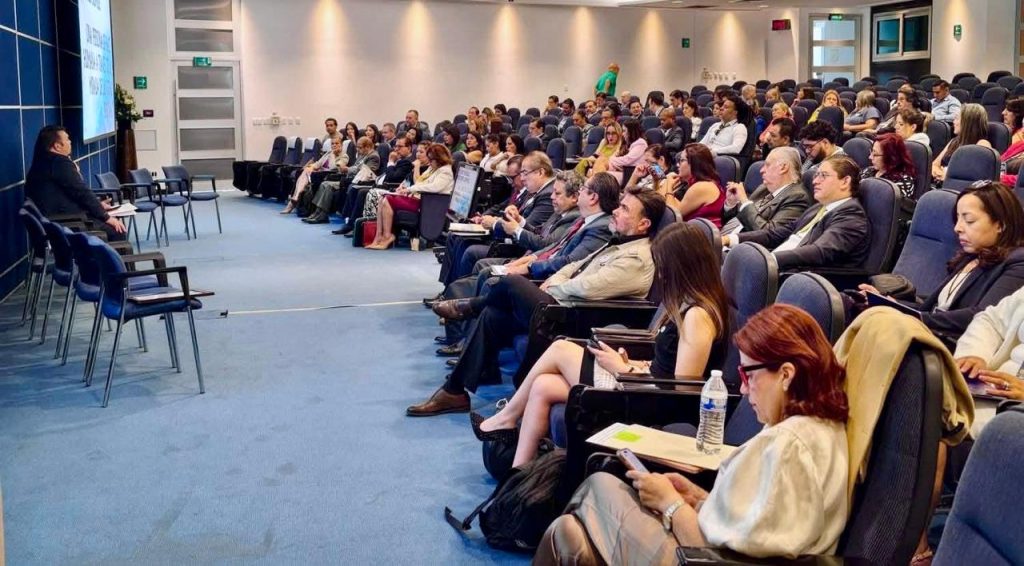
The in-person sessions carry a different energy from the virtual days. The hybrid model is genuinely smart: the two virtual days on the front end let mediators from across Latin America and Europe contribute, and then those of us on the ground got the hallway conversations, the coffee, and the handshakes no Zoom room could reproduce. As someone who has built his practice around online mediation, I appreciated that FIMEP didn’t treat “virtual” as the consolation prize, but treated it as a full part of the program. That was a great idea, and something that should be modeled by other conferences where great distance and travel costs exist.
The language reality and how tech got me through
I don’t speak Spanish fluently. My background in French does help me understand what’s being said, and I did try to practice a little before the Forum. But it’s difficult to pick up a third language in your 40s when you’re busy and unable to do full immersion. Fortunately, tech tools, especially AI, really helped. I was able to follow along throughout the entire conference and understand the points the speakers were making.
My first companion was the updated Google Translate app, which has come a remarkably long way with the addition of Gemini to its “Live Translation” modes. The real-time interpretation now is really accurate, especially in listening mode (the app listens to a speaker and automatically switches voices as it tracks the conversation), and feeds me a running interpretation while the person is still talking. It also now folds in Google Lens, so I could point my camera at a printed document or a PowerPoint slide on the screen and instantly translate the text. For a non-fluent attendee, that combination made a huge difference. You’ll, of course, miss things, but fortunately, the other attendees (some who spoke English) were super gracious and kind when they understood I lacked the full language skills to communicate in Spanish.
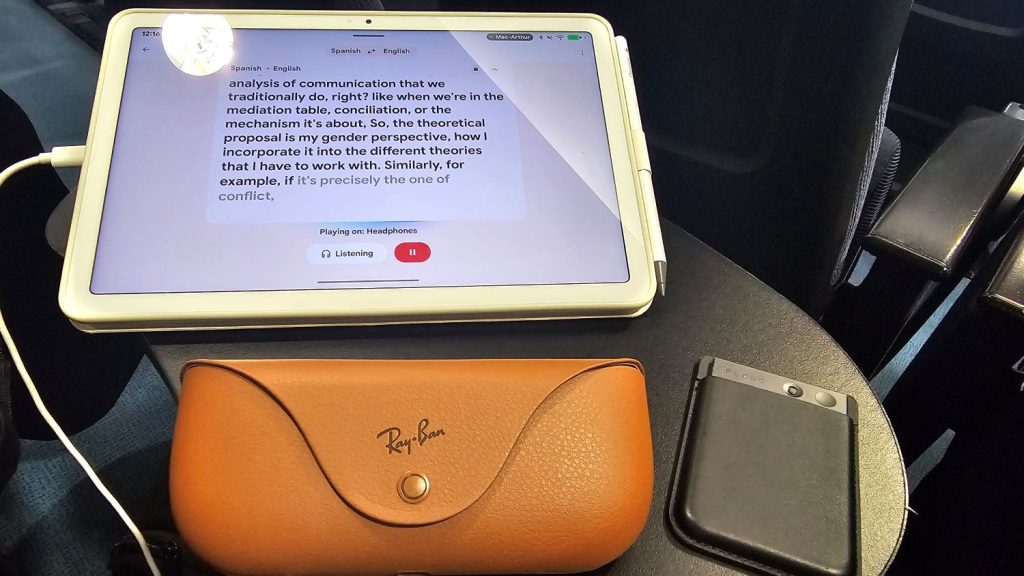
My second companion was my Plaud AI recorder. It runs and records for hours. Anything I missed in the live translation, I could revisit later by exporting the transcript and pulling it into AI to explain or summarize things.
The last tool was the Ray-Ban Meta smart glasses, which now have live translations. The form and function are great, allowing you to hear the translated language right in your ear. Unfortunately, you need to point the glasses at the speaker, which can be awkward, and the battery is pretty bad. You can’t go through an afternoon of translations if you must recharge every 45 minutes. My best solution was Google Translate on a tablet with a large battery and headphones with a long battery.
My takeaways and glad I came
Here’s the deeper reason an event like this is worth the trip: it hands you a working knowledge of what’s happening in mediation across the Spanish-speaking world, a conversation most American practitioners never get to overhear.
And the more I sat in it, the more this conviction grew in me: Human cultures differ, and language splits us into groups, but underneath all of it, we are fundamentally the same — brains and hearts that push, react, and respond in remarkably similar ways across every border. Every human being, no matter the flag or the mother tongue, is fundamentally seeking the same things: justice, respect, and empathy. You watch a mediator from Jalisco describe a hard case, and you realize you’ve sat across from that exact dynamic in a Houston conference room. The accent changes. The human being doesn’t. To promote cultures of peace around the world, we need more interactions by conflict resolvers in different jurisdictions. Seeing and learning new ways to address conflict from different perspectives will always be a good thing.
My own contribution: Tell a story instead of selling mediation
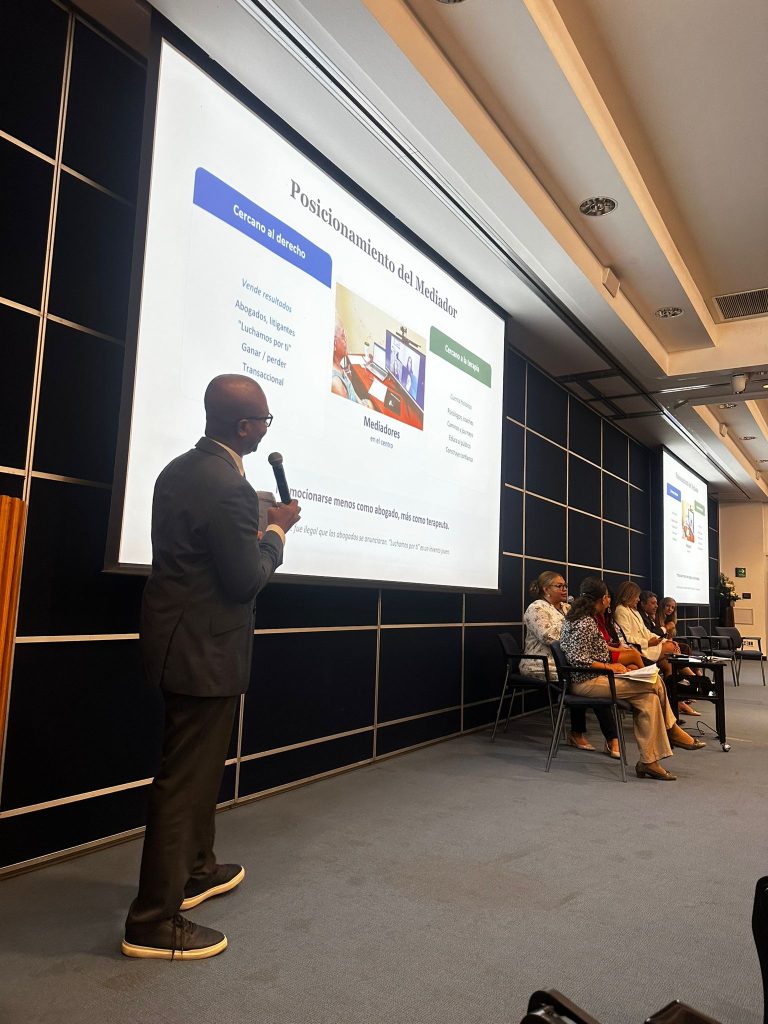
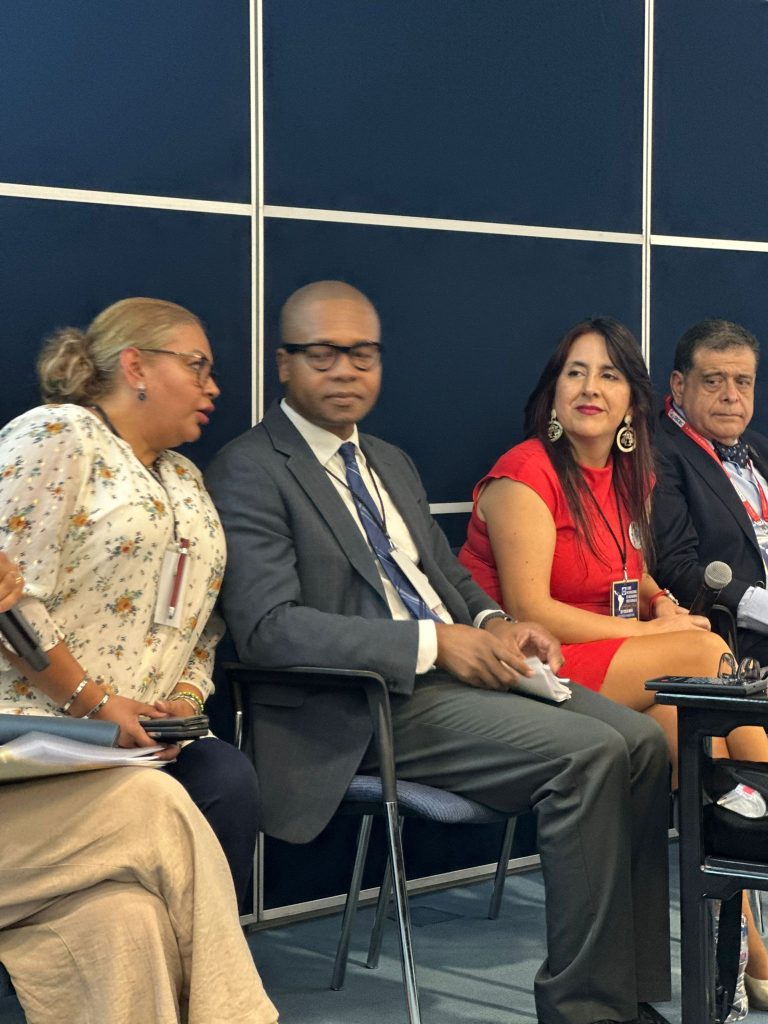
I was fortunate to sit on a panel where I presented on mediators becoming better storytellers. There are a lot of hurting people out there who can use conflict resolution to bring peace to their lives. However, most mediators either don’t share publicly what they do, or if they do, they sound like lawyers who focus on the win-lose model. I made my remarks in Spanish from a script I had prepared. I’ll reproduce that script here for those who may have missed the presentation or could not enjoy it due to technical difficulties. In a nutshell, my core question was: when you market your mediation, do you sound like a lawyer, or like a therapist? I argue that the answer should be “like a therapist,” because nobody likes to be sold to, but the human mind is built for stories.
See the documentary
That storytelling philosophy is exactly why I produced a documentary, letting people watch a roleplay divorce mediation unfold rather than explaining mediation to them. It’s told within the context of explaining the wider history of the development of online dispute resolution (ODR) around the world and will soon be on YouTube; it premieres June 10, 2026, at ODR 2026 (odr2026.org), at Harvard University in Boston, Massachusetts. You’ll be able to watch it at lmipodcast.com/film, and we plan to transcribe the entire film into Spanish for our colleagues across Ibero-America.
Final thoughts
This trip to a forum dedicated to conflict resolution in the Spanish-speaking world made me think a lot about my trip to France to attend the international congress for mediators in the French-speaking world.
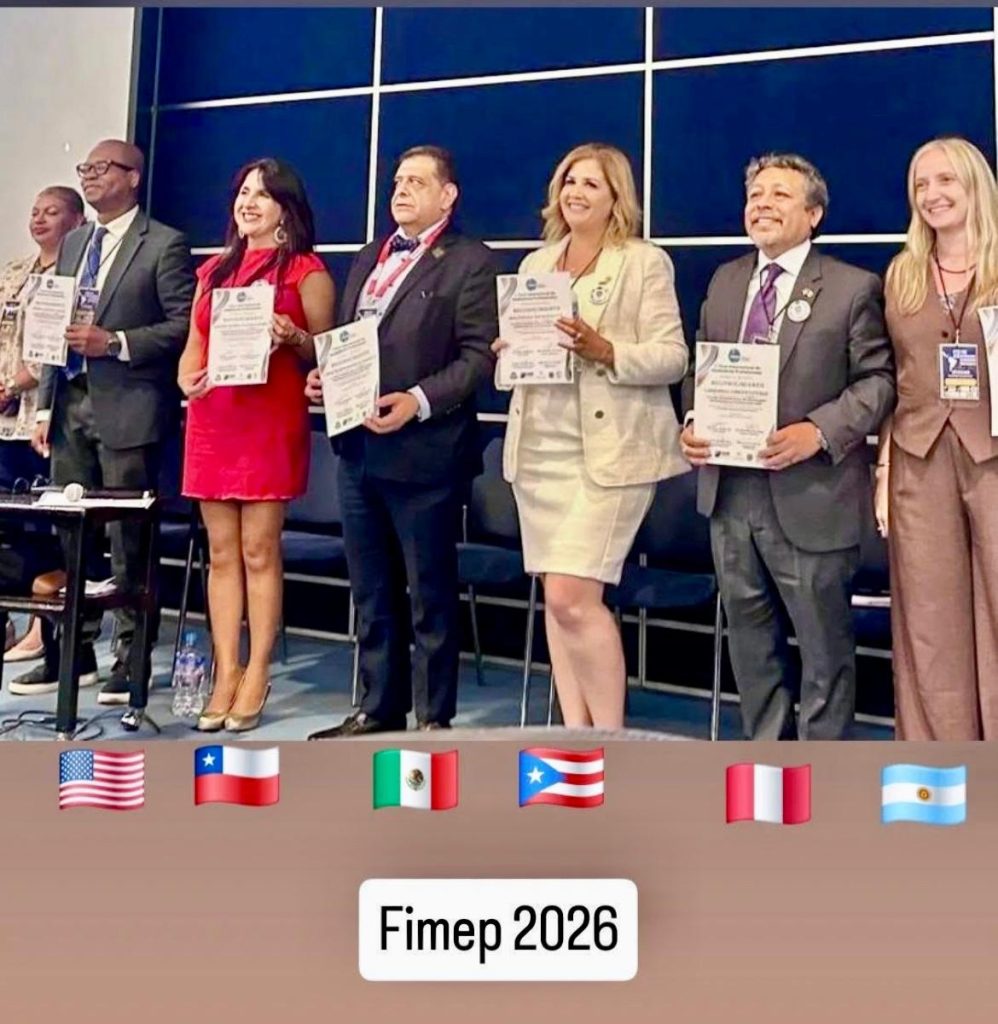
As stated above, what strikes me most, comparing Angers and Guadalajara, is how similar our struggles and aspirations are across borders and languages. Different jurisdictions, different statutes, different tongues, but the same conviction that there’s a better way to resolve conflict than dragging each other through court. That’s the cultura del acuerdo, and it travels well.
Don’t hate, mediate.
#Mediation #ConflictResolution #FIMEP2026 #mediacion #donthatemediate
